The Music of Ally McBeal That Shaped Its Quirky World
Imagine a TV show where the background music isn't just an afterthought, but a vital character, reflecting unspoken thoughts, fueling neurotic fantasies, and literally driving the plot forward. That's The Music of Ally McBeal. More than two decades after its debut, this groundbreaking series remains etched in pop culture history, not just for its groundbreaking portrayal of a young, neurotic lawyer navigating love and career, but for its utterly unique, genre-bending soundtrack. It was a show where a catchy pop tune could be a psychological prompt, a romantic confession, or a moment of pure, unadulterated escapism.
If you ever found yourself humming a Vonda Shepard tune or nodding along to a profound lyric that perfectly captured Ally's latest existential crisis, you know exactly what we're talking about. The music wasn't just in the show; it was the show.
At a Glance: What Made Ally McBeal's Music Unforgettable
- A Character All Its Own: The music wasn't mere accompaniment; it acted as Ally's inner voice, externalizing her deepest neuroses and desires.
- Vonda Shepard's Enduring Influence: As the resident bar singer and musical supervisor, Shepard was the heart and soul of the show's sound, performing countless tracks, including the iconic theme, "Searchin' My Soul."
- Eclectic Mix of Genres: From pop to soul, R&B to folk, the soundtrack seamlessly blended contemporary hits with timeless classics, creating a unique sonic tapestry.
- Narrative Driver: Songs often directly commented on the plot, foreshadowed events, or amplified the emotional impact of a scene, especially those set in the firm's bar.
- Star-Studded Guest Appearances: Musical legends like Barry White, Al Green, and Elton John lent their talents, often performing as themselves, adding a layer of meta-realism and glamour.
- Commercial Success: The soundtrack albums were massive hits, proving the music resonated far beyond the confines of the weekly episodes.
The Unseen Character: Music's Central Role in Ally's World
From the moment "Searchin' My Soul" kicked off each episode, Ally McBeal declared its musical intentions. This wasn't just incidental background noise; it was a carefully curated sonic landscape designed to plunge you into Ally's hyper-real, often surreal, emotional world. The show’s creator, David E. Kelley, understood that music could be a shortcut to the subconscious, a way to express the unspoken anxieties and desires of his characters, especially the titular Ally.
For five seasons, the melodies and lyrics acted as a Greek chorus, commenting on the often-absurd legal cases, the tumultuous love lives, and the perpetually evolving friendships within the quirky Boston law firm of Cage & Fish. It amplified the humor, underscored the heartbreak, and lent a profound sense of introspection to Ally's famously overactive imagination. When Ally felt something, you heard it. When she imagined something, you heard it. The line between reality and fantasy was often blurred, and music was the most powerful tool for blurring it.
Vonda Shepard: The Soul of the Bar
You can't talk about Ally McBeal's music without immediately thinking of Vonda Shepard. She wasn't just the artist behind the catchy theme song; she was the show's musical linchpin. Cast as the resident performer in the firm's ground-floor bar, Shepard's presence was a stroke of genius. She wasn’t just playing background music; her performances often directly reflected or even influenced the mood and narrative of the characters observing her from the bar stools.
Shepard's role extended far beyond her on-screen presence. As the musical supervisor, she was instrumental in shaping the show's entire sound, selecting countless covers and writing original material that perfectly encapsulated the Ally McBeal vibe. Her husky, soulful voice became synonymous with the show's emotional core, a constant, comforting, yet often poignant presence in the chaotic lives of the lawyers. Her ability to deliver a raw, heartfelt rendition of a classic or imbue a new song with instant familiarity made her an indispensable part of the series' identity.
Ally's Inner Soundtrack: Giving Voice to Neuroses
Ally McBeal's internal life was always on full display, whether through her direct narration, her vivid daydreams, or her infamous visual and auditory hallucinations. Music played a critical role in externalizing these inner experiences, making her neuroses and romantic longings tangible for the audience. A snippet of a song could instantly convey her anxiety, her infatuation, or her deep-seated loneliness, often more effectively than dialogue ever could.
This was a show ahead of its time in demonstrating how music could serve as a direct window into a character's psychological state. It transformed passive listening into an active, interpretative act, inviting viewers to understand Ally's perspective not just through her actions but through the melodies swirling around her.
The Dancing Baby and Beyond: Visualizing Sound
Perhaps the most iconic example of music giving form to Ally's inner world was the infamous "Dancing Baby." This early CGI phenomenon, set to the tune of Blue Swede’s "Hooked on a Feeling" (with its memorable "Ooga Chaka" intro), embodied Ally's ticking biological clock and her anxieties about motherhood. The baby wasn't a real entity in the show's world; it was a manifestation of Ally's subconscious, made unforgettable by its perfect musical accompaniment.
Beyond the dancing baby, Ally’s mind was a concert hall of internal prompts. A sudden cello note might signal a moment of profound sadness, or a jaunty piano riff could accompany a flight of fancy. These auditory cues weren't just sound effects; they were integral parts of her internal narrative, illustrating how her thoughts and feelings often presented themselves as fully scored mini-dramas. This innovative use of music allowed the audience to experience Ally's world from the inside out, creating a deep empathy for her often-absurd predicaments.
Love, Loss, and Laughter: Songs as Emotional Mirrors
The music in Ally McBeal was a master at reflecting the ever-shifting emotional landscape of its characters, particularly Ally's tumultuous love life. Remember Ally and Billy's complicated, on-again-off-again dynamic? Songs like "Maryland" (from the Fandom Wiki, specifically noted for the Ally/Billy storyline) often played at pivotal moments, encapsulating their longing, their regrets, and the undeniable connection that lingered between them. The lyrics weren't just background noise; they became dialogue, echoing the characters' unspoken truths.
When Ally found herself caught in another romantic entanglement, the music was right there, acting as her internal monologue. A song like "Tell Him" (also referenced on the Fandom Wiki as a key song reflecting Ally's desires) perfectly articulated the unspoken desires and hesitations she felt towards her love interests. Or consider the passionate, yet often fraught, relationship with Larry Paul, beautifully underscored by tunes like "You're My Thrill." These musical choices elevated the romantic stakes, turning every glance and every missed connection into a moment of high drama, deeply felt by the audience because the soundtrack was feeling it too.
The "Cage & Fish" Bar: Where Melodies Met Mayhem
While the courtroom scenes at Cage & Fish often showcased the intellectual sparring and legal theatrics, it was the firm's downstairs bar that served as the true emotional and social nexus of the series. This was where the characters unwound, confided in each other, clashed, and ultimately found solace. And at the heart of it all was Vonda Shepard and her band, providing a constant, flowing soundtrack to their lives.
The bar wasn’t just a setting; it was a sanctuary, a stage, and a confessional. The music played here wasn't just background noise; it was an active participant in every scene, reacting to the conversations, underscoring the flirtations, and commenting on the day's dramas. This unique setup allowed the show to seamlessly transition between dialogue and musical performance, blurring the lines between reality and Ally's perception of it.
Beyond Background Noise: Music as Commentary
Vonda Shepard's performances in the bar were often incredibly deliberate, chosen to resonate directly with the characters' current situations. If Ally was reeling from a breakup, Vonda might launch into a soulful ballad about heartbreak. If Fish and Ling were having a particularly bizarre exchange, a quirky, upbeat tune might play, highlighting the absurdity. The music acted as a live, dynamic commentary track, adding layers of meaning to the character interactions.
It wasn’t uncommon for a character to directly respond to a song, either by requesting one, remarking on its lyrics, or finding personal significance in its melody. This integration made the music feel alive and responsive, transforming the bar into a living, breathing character in itself. It ensured that the music was always relevant, always pushing the emotional envelope, and never just a forgotten element.
The Ensemble Sings: Integrating Characters into the Music
What made the music in the bar truly special was not just Vonda Shepard's talent, but how the other characters often joined in. From Richard Fish's surprisingly good falsetto to John Cage's impromptu dances (often to Barry White), and Ling Woo's deadpan renditions, the ensemble cast frequently broke into song, sometimes spontaneously, sometimes as part of a planned performance. This created a sense of community and shared emotional experience, reinforcing the idea that this quirky group was a kind of dysfunctional family.
These musical interludes weren't just for entertainment; they often revealed deeper aspects of the characters. John Cage's "oogie" dance moves, performed to Barry White, became a signature eccentricity, a way for him to cope and express himself. Even Ally herself would occasionally step up to the mic, offering a raw, vulnerable performance that gave the audience a rare, unmediated glimpse into her soul. This integration of the ensemble into the musical fabric further solidified the music's role as a central, unifying force.
Iconic Moments, Iconic Songs: A Deep Dive into the Playlist
The sheer volume of memorable songs in Ally McBeal is staggering. Beyond Vonda Shepard's originals and covers, the show featured a broad spectrum of artists and tracks, each carefully chosen to enhance the narrative. The Fandom wiki for Ally McBeal's music provides a treasure trove of examples, illustrating just how meticulously the show's creators curated its soundscape. These songs became inextricably linked to the moments they underscored, often defining them more than the dialogue itself.
Whether it was a classic soul track igniting a sudden dance party in the office, a poignant ballad accompanying a heartfelt confession, or an upbeat pop song signaling a moment of newfound hope, the music was always spot-on. It wasn't just about what Ally was saying, but what she was hearing and feeling.
Guest Star Power: When Legends Dropped By
One of the most exciting aspects of Ally McBeal's musical landscape was its ability to attract an incredible roster of musical legends. These weren't just one-off cameos; these artists were often seamlessly woven into the narrative, performing in the bar, interacting with the characters, and occasionally even influencing the plot. This added a layer of star power and real-world credibility to the show's already rich musical tapestry.
- Barry White: Perhaps the most famous recurring musical guest, White became a spiritual guide (and musical muse) for John Cage, often appearing to soothe his neuroses with his deep, resonant voice. His performances of classics like "My First, My Last, My Everything" became synonymous with Cage's romantic overtures and awkward charms.
- Al Green: The legendary soul singer graced the bar with his presence, bringing his signature blend of gospel and R&B to the series. His performances added a touch of timeless cool and emotional depth, particularly during moments of romantic tension or reconciliation.
- Mariah Carey: The pop diva made a notable appearance, bringing her incredible vocal range to the bar and interacting with the main cast, showcasing the show's ability to attract top-tier talent.
- Elton John: The iconic pianist and singer performed in one of the series' most memorable musical moments, adding his legendary flair to the bar's stage.
- Sting: The former Police frontman also lent his distinctive voice, further elevating the show's musical credibility.
- Jon Bon Jovi: The rock star had a multi-episode arc as a potential love interest for Ally, and naturally, performed some of his own music, blurring the lines between actor and musician.
- Other notable guest stars included Gloria Gaynor, Macy Gray, Anastacia, Josh Groban, and Lisa Stansfield, all contributing to the show's reputation as a go-to destination for musical talent.
These guest appearances weren't mere stunts; they felt organic to the show's world, further enhancing the idea of the bar as a vibrant, musically rich hub where anything could happen.
The Ally McBeal Soundtracks: A Legacy in Wax (or CD)
The impact of Ally McBeal's music wasn't confined to the television screen. Its popularity exploded into the commercial market, with several soundtrack albums topping charts and becoming bestsellers. This was a testament to how deeply the music resonated with audiences, who wanted to bring a piece of Ally's quirky, emotional world into their own homes.
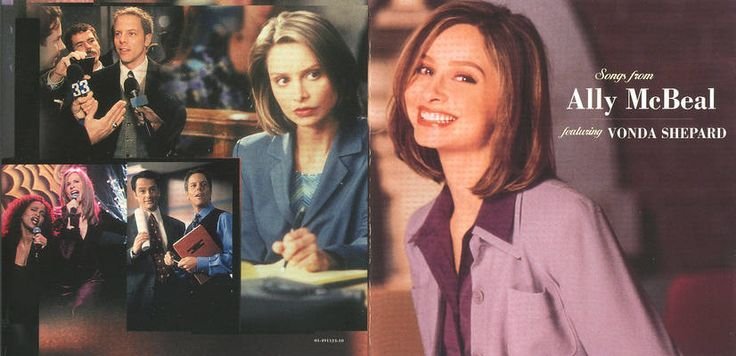
The first soundtrack, "Songs from Ally McBeal featuring Vonda Shepard," released in 1998, was a runaway success. It included hits like "Searchin' My Soul," "Maryland," and covers of classics performed by Shepard, instantly transporting listeners back to the Cage & Fish bar. The album's success led to subsequent releases, including "Ally McBeal: For Once in My Life featuring Vonda Shepard" and "Ally McBeal: The Best of Ally McBeal," each continuing to feature Shepard's distinctive voice alongside other artists and memorable tracks from the show.
Commercial Success and Cultural Impact
The soundtrack albums weren't just financially successful; they cemented Ally McBeal's place as a cultural phenomenon that transcended television. They introduced Vonda Shepard to a global audience, establishing her as a beloved artist in her own right. For many viewers, these albums became more than just collections of songs; they were emotional time capsules, perfect for revisiting the show's blend of humor, romance, and existential angst.
The continued demand for these albums underscored a crucial point: the music of Ally McBeal was integral to its identity. It wasn't just background noise; it was a character, a storyteller, and a companion. The soundtracks allowed fans to keep that character alive, long after the final episode aired, and continue to serve as a vibrant reminder of what made the show so special.
Crafting the Quirky Vibe: The Art of Musical Storytelling
The seamless integration of music into Ally McBeal was no accident. It was the result of a deliberate, innovative approach to storytelling that recognized music's power to convey emotion and character. David E. Kelley, known for his unique narrative style, understood that a well-placed song could speak volumes, creating a unique shorthand with the audience.
The show broke conventions by allowing music to frequently interrupt or lead the narrative, rather than simply underscore it. This made for a dynamic, often unpredictable viewing experience, keeping audiences engaged and frequently surprised. It was a bold creative choice that paid off handsomely, distinguishing Ally McBeal from its contemporaries.
Behind the Scenes: How Music Was Chosen and Integrated
The process of selecting and integrating music for Ally McBeal was a collaborative and meticulous effort. Vonda Shepard, as the musical director, worked closely with David E. Kelley and the show's producers to find songs that perfectly matched the emotional beats of each script. This wasn't about simply licensing popular songs; it was about finding the right song that could articulate Ally's inner thoughts, comment on a legal case, or enhance a romantic moment.
Sometimes, the music would be chosen before a scene was even shot, influencing the actors' performances and the director's vision. Other times, a song would be carefully placed in post-production to amplify an existing emotion. This dynamic, iterative process ensured that the music never felt tacked on, but always organic and essential to the storytelling. The team focused on both the lyrical content and the emotional tone of each track, ensuring maximum impact.
What Made It Work: Synchronicity and Surprise
The magic of Ally McBeal's music lay in its perfect synchronicity with the show's quirky tone and its ability to surprise. Just when you thought you had a handle on a scene, a perfectly unexpected song would kick in, shifting the mood, adding a layer of irony, or deepening the emotional resonance. This element of surprise kept the audience on their toes, much like Ally herself.
Moreover, the music provided a unifying thread through the show's often disparate elements – the fantastical inner world of Ally, the serious courtroom dramas, and the lighthearted romantic comedies. It gave the series a consistent voice, an emotional core that grounded even its most outlandish moments. The music became a character you could rely on, always there to explain what Ally couldn't, or wouldn't, say aloud. If you're looking for an in-depth exploration of everything that made the show a phenomenon, you'll want to check out Your complete Ally McBeal guide.
Beyond the Bing: The Enduring Echo of Ally's Music
Even years after its final episode, Ally McBeal's musical legacy continues to resonate. It set a new standard for how television shows could use music as a narrative device, influencing countless series that followed. The show proved that a soundtrack could be more than just background noise; it could be a character, a narrator, and a mirror reflecting the deepest parts of the human experience.
Its innovative approach to integrating music not only entertained millions but also highlighted the emotional power of song to convey complex feelings and internal conflicts. The catchy tunes and poignant ballads became ingrained in the minds of viewers, making them an inseparable part of the show's identity. Revisiting the music today is like stepping back into Ally's world, complete with its neuroses, its heart, and its enduring charm.
Your Turn: Exploring the Soundtrack of Your Life (and Ally's)
The music of Ally McBeal wasn't just a collection of songs; it was an experience. It tapped into the universal human condition of self-doubt, longing, and the search for connection, all wrapped in a wonderfully eccentric package. Whether you were an Ally, a John, a Richard, or a Ling, the show's soundtrack offered a melody for your own inner monologues.
So, queue up a Vonda Shepard playlist, revisit a classic Ally McBeal episode, and let the music transport you back to that unforgettable Boston law firm. Pay attention to how the songs play into the characters' inner worlds, how they comment on the story, and how they make you feel. You might just discover that your own life has a pretty compelling soundtrack, too.